Peptide
Outer-membrane-destabilising or synergistic antimicrobial peptide. Governs access to Gram-negative targets and can sharpen activity on Gram-positive cells after ‘artilysation’.
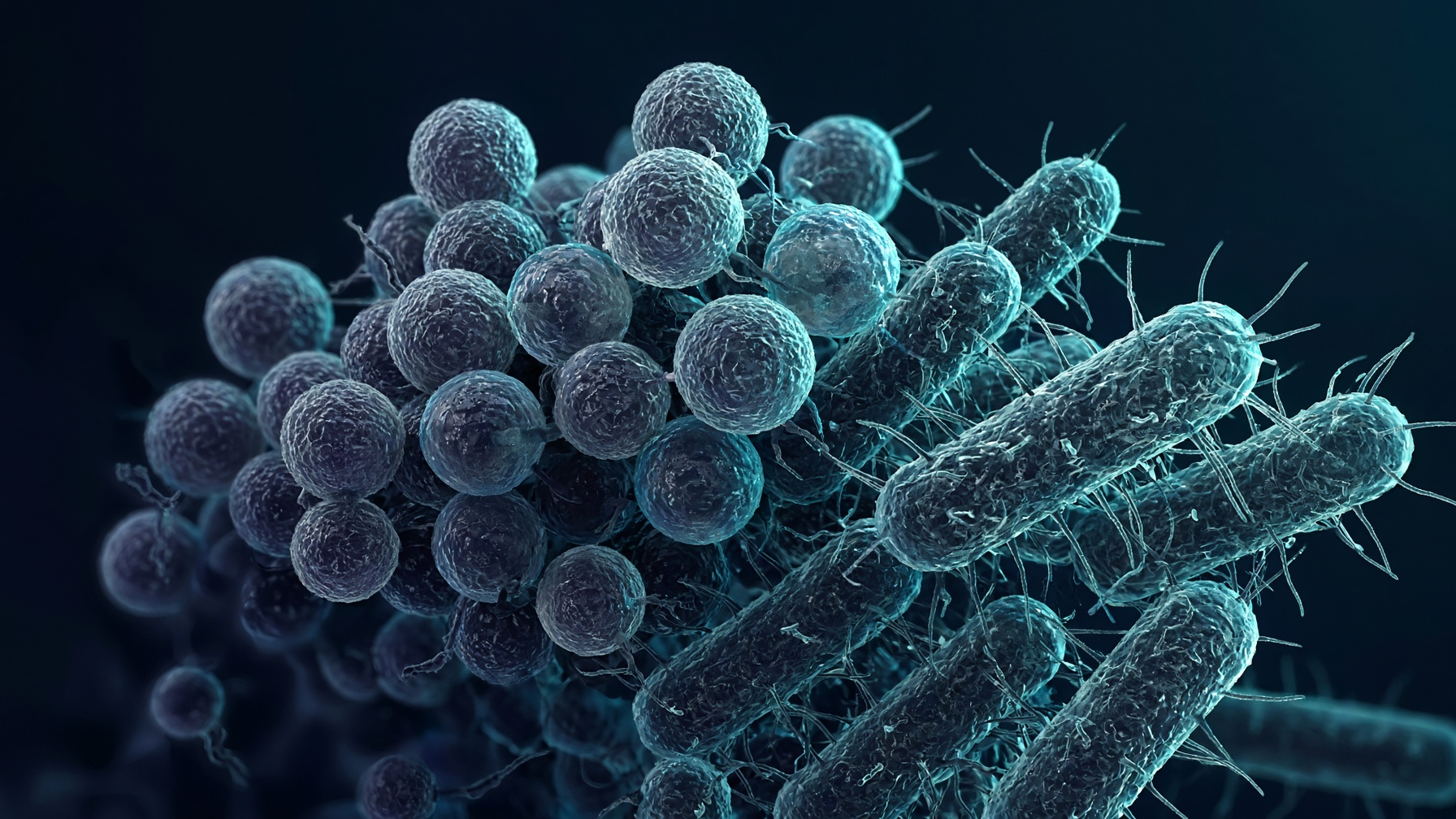
Engineered antimicrobial proteins
A modular protein that finds a pathogenic bacterium, opens its outer defences, and cuts the cell wall until the cell bursts — in seconds, without needing the cell to be alive or growing.
The problem
Bacteria and the molecules that kill them have co-evolved for millions of years. Clinical antibiotics supercharged that process. In roughly 1.2 million bacterial generations since Fleming, resistance has become a leading cause of death.
In 2019, infections caused directly by resistant bacteria accounted for an estimated 1.27 million deaths worldwide, with a further five million deaths associated with antimicrobial resistance. Conventional drugs also fail against dormant persister cells and the biofilms that shelter them — the biology behind chronic wounds, recurrent urinary tract infections, and many hospital-acquired infections.
The molecule
Bacteriophages already encode the enzymes that burst bacteria from within — endolysins, which hydrolyse peptidoglycan at the end of the phage replication cycle. Applied from outside, those enzymes work well on Gram-positive cells. Gram-negative pathogens hide the same target behind an outer membrane.
Artilysin® proteins are engineered fusions: a selected endolysin covalently joined to an outer-membrane-destabilising peptide. The peptide promotes uptake across the outer membrane; the enzyme then degrades the cell wall, and the cell lyses by osmotic rupture. The platform is owned by Lysando and designed as a modular kit of peptides, enzymatically active domains, and cell-wall-binding domains.
The founding construct Art-175 joins the sheep myeloid peptide SMAP-29 to the KZ144 endolysin of Pseudomonas phage φKZ. In published work it killed multidrug-resistant P. aeruginosa by about five log units, punctured peptidoglycan within a minute, and remained active against metabolically dormant persisters.

Mode of action
Unlike antibiotics, Artilysin does not need to enter the cytoplasm or hijack metabolism. It is a physical attack on structures the bacterium cannot easily redesign.
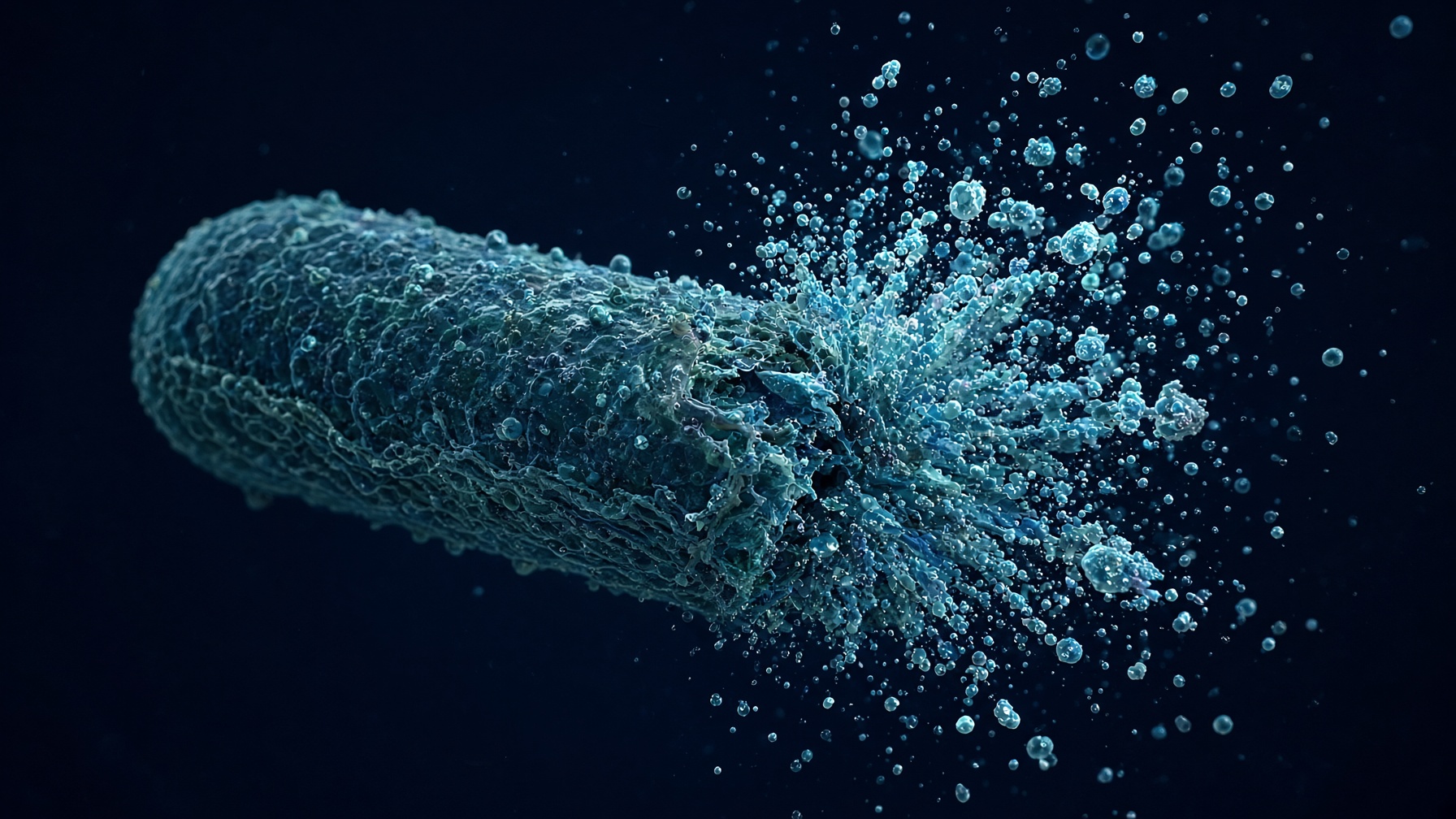
A cationic peptide interacts with lipopolysaccharide and promotes its own uptake, giving the fusion access that a naked endolysin does not have against Gram-negative cells.
The enzymatically active domain cleaves conserved bonds in the cell wall. Time-lapse microscopy of Art-175 shows puncturing within one minute, followed by membrane bulging.
Once the wall is compromised, turgor pressure ruptures the cell. Killing does not require growth, respiration, or a specific receptor — which is why persisters and many biofilm-embedded cells remain susceptible.
Modular platform
Each Artilysin is assembled from interchangeable parts. In principle the combinatorial space exceeds eight million designs; only a fraction are stable and active. Lysando uses this kit — and an in-house biobank of pathogenic strains — to tune spectrum, stability, and producibility for a given indication.
Outer-membrane-destabilising or synergistic antimicrobial peptide. Governs access to Gram-negative targets and can sharpen activity on Gram-positive cells after ‘artilysation’.
The enzymatically active domain (EAD) cleaves defined bonds in peptidoglycan — amidase, muramidase, glucosaminidase, or endopeptidase chemistry.
A cell-wall-binding domain (CBD) docks to murein ligands or secondary wall polymers, concentrating the enzyme on the intended species.
Resistance
Art-175 remained essentially unchanged in MIC after twenty serial passages in three P. aeruginosa strains, while ciprofloxacin selected up to a 64-fold shift. No cross-resistance was observed with the mechanisms of twenty-one licensed antibiotics. The arguments below are why that result is expected from the design, not a lucky strain.
Applications
The same architecture can be retargeted. Below are the fields where Lysando has taken constructs furthest — and where the published biology of Artilysin is most relevant.
Wound care
Chronic wounds fail in part because biofilms and persisters sit beyond the reach of antibiotics, while antiseptics flatten the microbiome that healing needs.
Artilysin constructs such as those in MEDOLYSIN® wound spray are designed to cut pathogenic Gram-negative and Gram-positive load in sequence, then leave commensals to support repair. Published work on Art-175 showed killing of P. aeruginosa persisters by more than four log units. Field use has included diabetic foot ulcers, burns, and combat-related injuries; a NATO-supported MDR clinical study is the next formal step.
Dermatology
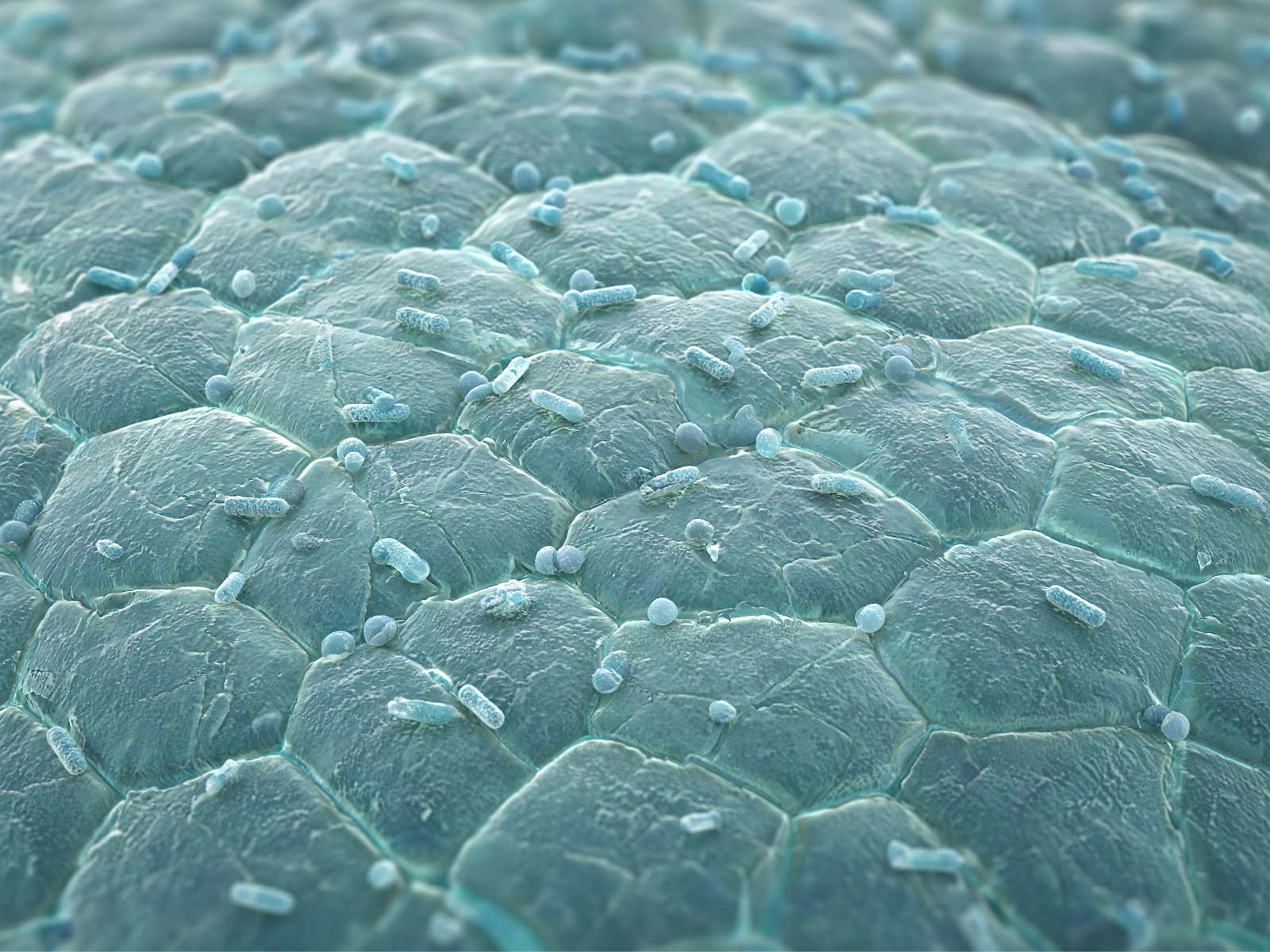
On skin, the aim is not sterility. S. aureus overgrowth drives flares of atopic dermatitis; loss of Cutibacterium acnes diversity tracks with acne.
Species-selective Artilysins can reduce the pathogenic phylotype without the broad collapse caused by topical antibiotics. ZenZema™ uses the platform in an eczema itch spray; a separate acne construct is in consumer testing. The same idea extends to pyoderma in companion animals, where S. pseudintermedius is a typical target.

Biofilms
Biofilms and persister physiology are why so many infections return after a ‘successful’ antibiotic course.
Endolysins act from without and do not require an energised cytoplasm. Art-175 lysed persister fractions of P. aeruginosa that ciprofloxacin left intact. That property is the rationale for chronic wound, implant-adjacent, and recurrent urinary applications, where the failure mode is survival in a non-growing state rather than classical resistance genes.
Further fields
Any epithelium colonised by a defined pathogen is a candidate, provided the construct can be delivered to the cell wall.
Urinary tract infection is a high-volume setting of recurrent, often resistant Gram-negative disease. Nasal decolonisation of MRSA, periodontal disease, and veterinary pyoderma sit in the same logic. In defence, Lysando was selected for the NATO DIANA accelerator to take the wound-care application into dual-use validation.
Spectrum
Individual constructs are specific. The platform is not. Lysando has shown activity against major Gram-negative and Gram-positive pathogens; the list below is illustrative, not exhaustive.
Selected publications
Key papers on Artilysin engineering, Art-175, persistence, and the microbiome context of wound healing. Listed as citations only — this page does not send you elsewhere.
Briers Y, Walmagh M, Grymonprez B, Biebl M, Pirnay J-P, Defraine V, Michiels J, Cenens W, Aertsen A, Miller S, Lavigne R. Art-175 is a highly efficient antibacterial against multidrug-resistant strains and persisters of Pseudomonas aeruginosa. Antimicrobial Agents and Chemotherapy. 2014;58(7):3774–3784.
doi:10.1128/AAC.02668-14
Briers Y, Walmagh M, Van Puyenbroeck V, et al. Engineered endolysin-based “Artilysins” to combat multidrug-resistant Gram-negative pathogens. mBio. 2014;5(4):e01379-14.
doi:10.1128/mBio.01379-14
Defraine V, Schuermans J, Grymonprez B, et al. Efficacy of Artilysin Art-175 against resistant and persistent Acinetobacter baumannii. Antimicrobial Agents and Chemotherapy. 2016;60(6):3480–3488.
doi:10.1128/AAC.00285-16
Rodríguez-Rubio L, Chang W-L, Gutiérrez D, et al. ‘Artilysation’ of endolysin λSa2lys strongly improves its enzymatic and antibacterial activity against streptococci. Scientific Reports. 2016;6:35382.
doi:10.1038/srep35382
Briers Y, Lavigne R. Breaking barriers: expansion of the use of endolysins as novel antibacterials against Gram-negative bacteria. Future Microbiology. 2015;10(3):377–390.
doi:10.2217/fmb.14.153
Tomic-Canic M, Burgess JL, O’Neill KE, Strbo N, Pastar I. Skin microbiota and its interplay with wound healing. American Journal of Clinical Dermatology. 2020;21(Suppl 1):36–43.
doi:10.1007/s40257-020-00536-w
Murray CJL, Ikuta KS, Sharara F, et al. Global burden of bacterial antimicrobial resistance in 2019: a systematic analysis. The Lancet. 2022;399(10325):629–655.
doi:10.1016/S0140-6736(21)02724-0
Platform, product, and case descriptions on this page also draw on Lysando’s August 2026 introduction and the Artilysin whitepaper (draft v4.1), including the OECD 301B biodegradability claim and the design arguments against resistance.